
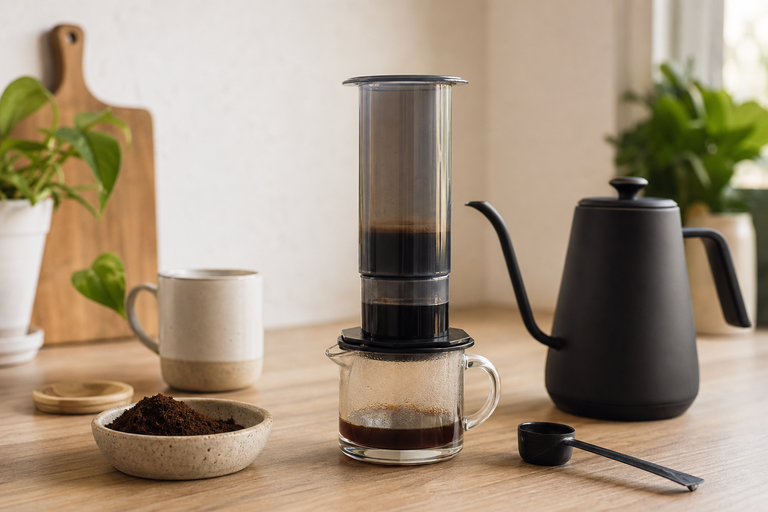
Standard AeroPress brews can finish thin and sour, especially with lighter coffees. Flipping the brewer upside down fixes most of it. The grounds steep without dripping early, which pulls more sweetness and a heavier body out of the same dose.
What follows is the recipe I run almost every morning: exact grams, seconds, and degrees, plus the plunge details that trip up most people in the first few weeks.
Why Flipping Changes the Cup
Right-side up, water starts seeping through the filter the moment it hits the bed. That shortens your real contact time and leaves the late-developing sugars stuck in the puck.
Inverted, the plunger seals the bottom of the chamber. Nothing leaves. Every gram of water you pour stays on the grounds for the entire steep, pulling more dissolved solids (sugars, oils, fines) into the cup. Higher solids read on the tongue as sweetness and a thicker mouthfeel.
I tested this back-to-back last weekend with a 15 g dose of Onyx Southern Weather, same grind on my Comandante C40, same water. The standard brew was clean but slim. The inverted cup at 1:30 had noticeably more cocoa and a syrupy finish. Same beans, different cup.
Gear and Grind
A short kit list before the recipe:
- AeroPress (original or Clear)
- Paper filter (or metal, if you want even more body)
- Scale that reads to 0.1 g
- Kettle with temperature control, or a thermometer
- Burr grinder set to medium-fine
- Timer
- 15 g of fresh coffee, roasted within the last 4 weeks
Grind is the single biggest lever. Aim for the texture of fine sea salt, slightly finer than table salt. Too coarse and the body thins out. Too fine and the plunge turns into a wrestling match while the cup goes bitter.
The Recipe, Step by Step
Ratio: 15 g coffee to 225 g water (1:15). Concentrated but balanced. Drinks like a heavy pour-over.
- Assemble inverted. Push the plunger into the chamber about 2 cm, then flip the whole thing so the plunger rests on the counter and the open chamber faces up. Keeping the plunger shallow leaves headroom for water and stops the brewer from tipping.
- Rinse the filter and preheat. Drop the paper filter into the cap, rinse with hot water, set the cap aside. The rinse takes the papery taste off and warms the cap, so you lose less heat at flip time.
- Heat water to 85°C (185°F). Cooler water favors sweetness over bitterness across a long steep. Light roasts can push to 88°C; dark roasts come down to 82°C.
- Add 15 g of coffee. Tare your scale with the inverted AeroPress on it, then dose. A gentle shake levels the bed for even saturation.
- Bloom with 45 g of water for 30 seconds. Pour fast enough to wet every ground, then stir 3 times with a paddle or chopstick. The bloom drives out trapped CO₂, which otherwise blocks water from reaching the coffee and causes uneven extraction.
- Pour to 225 g total over about 15 seconds. Aim the stream at the center of the bed, not the walls. A steady pour keeps slurry temperature consistent.
- Stir once gently, then cap. One stir at the top closes any channels without over-agitating. Screw the rinsed filter cap on firmly.
- Steep until 1:30 on the timer. That total includes your 30-second bloom. Longer extracts more, but past 2:00 you start pulling bitter compounds.
- Flip and plunge. At 1:30, set your mug upside-down over the cap and flip the whole stack in one confident motion. Press with steady pressure for 25 to 30 seconds. You should feel resistance, not a fight.
- Stop at the hiss. Pull the AeroPress off the cup the instant you hear air. Pushing past that point forces bitter slurry through the puck.
Agitation, Temperature, and the Flip
Three small variables decide whether your cup is great or just fine:
- Agitation: Stir 3 times after the bloom, once after the full pour. More than that and you generate fines that clog the filter and cause channeling.
- Temperature: Use a kitchen thermometer for the first few brews. Guessing usually costs you 5 to 10°C, and the cup tastes flat.
- The flip: Press the mug down onto the cap before flipping, so the joint seals. Flip in one motion, not a slow tilt. Slow flips leak.
Troubleshooting
| Symptom | Likely Cause | Fix |
|---|---|---|
| Sour, thin cup | Under-extracted | Grind finer one notch, or extend steep to 1:45 |
| Bitter, dry finish | Over-extracted | Grind coarser, drop temp to 83°C, or plunge faster |
| Watery body | Ratio too weak or grind too coarse | Try 1:14 (16 g coffee to 225 g water) |
| Hard plunge | Grind too fine, or too many fines | Coarsen slightly; let coffee rest 30 seconds before pressing |
| Leaks during flip | Plunger pushed too deep, or cap loose | Reset with plunger 2 cm in; tighten cap a quarter-turn |
If sourness sticks around even after these tweaks, work through a dedicated sour-AeroPress troubleshooting guide to isolate the cause.
Adjusting by Roast Level
- Light roast: 88°C, steep 2:00, grind one notch finer.
- Medium roast: 85°C, steep 1:30 (the base recipe).
- Dark roast: 82°C, steep 1:15, grind one notch coarser to keep bitterness in check.
Numbers to Keep on the Counter
- Coffee: 15 g
- Water: 225 g (1:15 ratio)
- Temperature: 85°C / 185°F
- Grind: medium-fine, like fine sea salt
- Bloom: 45 g water, 30 seconds, 3 stirs
- Main pour: to 225 g over 15 seconds, 1 stir
- Total steep: 1:30
- Plunge: 25 to 30 seconds, stop at the hiss
Try this first: weigh 15 g, set the kettle to 85°C, and run the recipe exactly as written before you change a single thing. Taste it. Then adjust one variable at a time. Once the inverted recipe feels dialed in, the same one-variable-at-a-time approach transfers cleanly to dialing in a V60 for light roast single-origin beans.