
Five coffee stories landed in the same news cycle, and read together they redraw the map for what home brewers will pay, taste, and find on shelves through late 2026.
The week’s five headlines
On May 20, 2026, Daily Coffee News published three separate reports: a Florida cafe owner’s fraud lawsuit against a New York landlord, an India sourcing brief, and Wanderlust Coffee’s second Indiana location. Sprudge confirmed open submissions for the 2026 Build-Outs of Coffee design feature. Perfect Daily Grind ran a long analysis of mounting concerns around co-fermented coffees.
Each story is small alone. Together, they sketch a market squeezed by supply, scrutiny, and rent.
Why this reaches your kitchen counter
The bag you buy is the downstream product of farm processing choices, importer relationships, and a cafe’s lease math. When co-ferments draw backlash, roasters narrow their experimental lots. When India’s arabica output shrinks, blend recipes shift. When cafe operators get squeezed on rent, retail bag prices follow. None of this is abstract. It shows up in your grinder within a season or two.
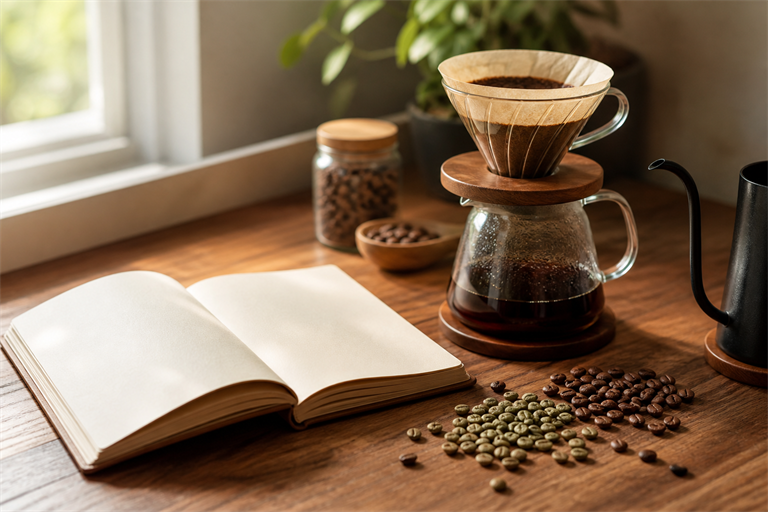
Honestly, I felt it last week. I picked up a 250g “co-fermented” lychee-tagged natural from a local roaster, brewed it on my Hario V60 02 at an 18g:288g (1:16) ratio with 94°C water, and the lychee was so dominant on the first cup that I went back to check what “co-ferment” actually means before pouring the second. That’s the story I’m sitting with as I write this.
Key details at a glance
| Story | Source | Core figure or claim | Home-brewer signal |
|---|---|---|---|
| Co-ferment debate | Perfect Daily Grind | Concerns over undisclosed flavor additives in “co-fermented” lots | Read processing notes carefully; ask roasters what was added |
| 2026 Build-Outs | Sprudge | Open call for new cafe design submissions, judged later in 2026 | Preview of cafe aesthetics that influence home brew-bar trends |
| Florida vs NY lease lawsuit | Daily Coffee News | Cafe owner alleges fraud against a NY-based real estate firm | Independent cafes face thinning margins; expect price pass-through |
| India coffee report | Daily Coffee News | Soluble (instant) drives export growth; arabica acreage and output declining | Indian arabica in blends may shrink or get pricier |
| Wanderlust Coffee | Daily Coffee News | Opens second cafe in Indiana | Growth happening in mid-size markets, not just coasts |
The co-ferment problem, in plain terms
Co-fermentation means farmers add fruit, yeast, or other inputs during the coffee’s fermentation stage to push flavor in a specific direction: strawberry, lychee, cinnamon. Perfect Daily Grind reports that the debate has sharpened around disclosure. When does a processing innovation cross into a flavor additive that masks the bean’s origin character? Some roasters now refuse undisclosed co-ferments. Others defend the category as a legitimate craft tier.
The practical move at home is simple. Check the bag for processing details. If a coffee tastes wildly like one specific fruit, that fruit may have been introduced during fermentation, not grown in the cup.
India’s split signal
Daily Coffee News summarizes a report showing soluble coffee, the technical name for instant, driving India’s export growth while arabica production declines. India is the world’s seventh-largest producer, and its washed arabicas regularly appear in supermarket blends and some specialty offerings. A sustained arabica drop there means roasters lean harder on Brazil, Colombia, or Ethiopia to fill blend slots, which tightens pricing across the board. This echoes the supply-side squeeze flagged in earlier May 2026 industry coverage on the Indonesia drop and hybrid-machine launches.
The lease lawsuit nobody wants to read but should
The Florida cafe owner’s fraud complaint against a New York real estate giant, as reported by Daily Coffee News, alleges misrepresentation around lease terms. The case itself is one dispute. But it spotlights a pattern: independent cafes operate on margins under 10%, and a single bad lease clause (escalators, undisclosed common-area charges, exclusivity gaps) can close a shop. When cafes close, the local roasters they bought from lose retail shelf space, and home customers lose their pickup spot.
Three perspectives on the same week
- The specialty roaster’s view: Co-ferment scrutiny is overdue, and India’s arabica decline forces a real conversation about blend transparency. Expect more single-origin emphasis through Q3 2026.
- The cafe operator’s view: The Florida lawsuit is a wake-up call. As Daily Coffee News framed it, lease structure is now an existential issue, not a back-office one. Build-Outs submissions and Wanderlust’s Indiana expansion show that growth still exists, but it favors operators with strong unit economics in cheaper real-estate markets. The earlier May 2026 news cycle on Ducati pods and the Cup of Excellence app hinted at the same uneven-growth pattern.
- The home brewer’s view: Bag prices on Indian-origin blends and experimental co-ferment lots are the two line items most likely to move first. Stocking up on a trusted natural-process Ethiopian or washed Colombian is a reasonable hedge. Pair it with a dripper that rewards single-origin clarity to actually taste what you’re paying for.
What’s next
- Co-ferments: Watch for the Specialty Coffee Association and major competitions to issue clearer disclosure rules before the 2026 World Brewers Cup season concludes.
- India: The next Coffee Board of India crop estimate, typically updated quarterly, will confirm whether the arabica decline is structural or weather-driven.
- Build-Outs 2026: Sprudge’s submission window closes later this year, with winners profiled in early 2027, a preview of the cafe design language that trickles into home setups.
- Wanderlust and the lawsuit: Both stories will be re-tested by the same question. Can independent cafes still scale in 2026 without coastal capital?
For your next bag, do one specific thing: read the processing line on the label. If it just says “natural” or “washed,” you’re on familiar ground. If it says “co-fermented” with no further detail, ask the roaster what was added before the beans hit your calibrated grinder.