
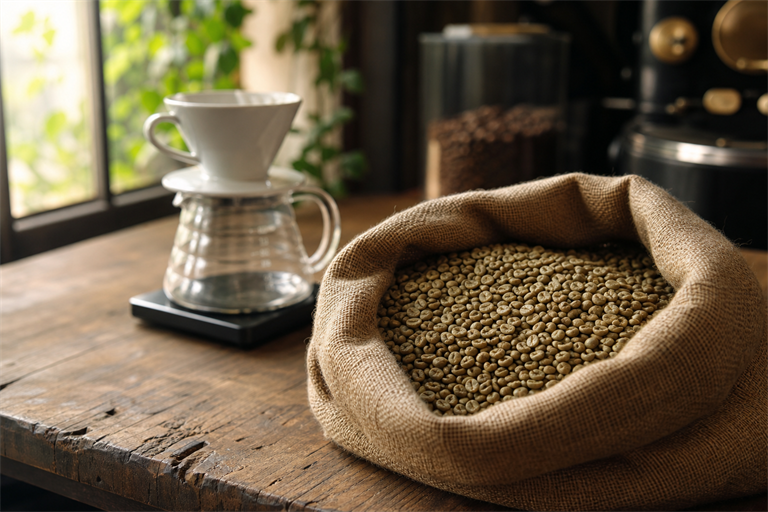
Perfect Daily Grind opened nominations this month for the Global Coffee Awards’ first Asia roaster category. The same week, the publication ran a feature asking whether specialty’s most ignored product, decaf, finally deserves the same care. Read together, the two pieces sketch one story. As Asia’s roasters chase global recognition, decaf is the quiet category home brewers can upgrade on Monday.
I cupped three Asian decafs this month: a Sumatran EA from a Seoul roaster, a Yunnan Swiss Water lot, and a CO2-processed Thai bourbon. The gap with conventional specialty has narrowed in a way I did not expect a year ago.
Two headlines that point the same direction
The Global Coffee Awards is expanding its judging into Asia for the 2026 cycle and opening a dedicated Best Asian Roaster track. Perfect Daily Grind reports nominations close in the third quarter, with a shortlist judged on green sourcing transparency, roast consistency, and category breadth, including decaf and instant (Perfect Daily Grind).
That last bit is the lever. Awards programmes did not used to score decaf at all. Once a judging body lists decaf as a scored category, roasters get pulled into buying better green and processing it more carefully.
The companion piece argues that specialty has treated decaf as a courtesy SKU for two decades, despite measurable progress in the green (Perfect Daily Grind).
What the awards criteria actually reward
According to Perfect Daily Grind’s reporting, the Asia track’s roaster scorecard weighs five things. Here is how they break down, and what each one signals for the bag on your shelf.
| Criterion | Weight | What it means for your home brew |
|---|---|---|
| Green sourcing transparency | 25% | Lot-level origin notes, including for decaf |
| Roast consistency (Agtron range) | 20% | Tighter dev windows, fewer baked bags |
| Category breadth (incl. decaf, instant) | 20% | Roasters can no longer skip decaf |
| Sensory score (cupping panel) | 25% | Decaf cupped alongside caffeinated lots |
| Sustainability disclosures | 10% | Process water, energy, packaging |
A 20% category-breadth weighting is the line that matters. A roaster cannot win on a single washed Ethiopian. They need a credible decaf on the shelf too.
Why decaf still lags
Decaf processing strips caffeine before roast, and each method leaves a different fingerprint. Perfect Daily Grind’s decaf piece lays out the three you will see on Asian roasters’ bags right now.
- EA (ethyl acetate, “sugarcane”): Solvent-based, often cane-sourced in Colombia. Cheaper, fruit-forward, can read slightly sweet-musty.
- Swiss Water: Water-and-charcoal, no solvent. Cleaner cup, higher green cost, the default for North American specialty.
- CO2 (supercritical): Pressurised carbon dioxide. Best flavour retention in cuppings, capital-intensive, mostly German plants.
The processing also softens the bean’s cell structure. That is the part most home brewers miss. Decafs extract faster and channel more easily, which is why a recipe that nails a Kenyan washed often pulls a bitter, hollow cup from the same roaster’s decaf bag.
Three views on whether any of this changes the cup
Perfect Daily Grind quotes Global Coffee Awards director Hidenori Izaki saying the Asia category exists because the green flowing into Tokyo, Seoul, and Taipei is no longer derivative of European supply chains. He frames the decaf scoring as overdue.
A more sceptical view, in the same article, comes from a Melbourne green buyer who argues that scoring decaf at competition level inflates expectations the supply chain cannot meet, given that fewer than 4% of green lots globally are processed without solvent.
A third perspective sits in the decaf feature itself. Counter Culture’s research lead notes Swiss Water decafs from 2025 Colombia crops cupped within two points of their caffeinated siblings on the SCA scale. The gap, she argues, is now a roast and brew problem, not a green problem.
Brewing the new decaf at home
Treat a specialty decaf like a soft, fast-extracting single origin. My working recipe on a Hario V60-02, after three Asian bags this month:
- Grind two clicks coarser than your usual washed setting (Comandante C40, around 24 clicks).
- Water at 92°C, not 96°C. The softer cell structure scorches.
- 1:16.5 ratio: 18 g in, 297 g out.
- Bloom with 54 g for 40 seconds. Decaf degasses less, so a long bloom mostly wastes time.
- Pour the rest in two stages after the bloom releases, finishing the drawdown between 2:30 and 2:45. Hitting 3:15 means you have over-ground.
The Yunnan Swiss Water lot, brewed this way, gave me stone fruit and brown sugar at 1.32% TDS on my VST refractometer (well inside the SCA brewing chart’s 1.15–1.45 window). That is a number I would have called impossible for decaf in 2022.
What to watch through the rest of 2026
Global Coffee Awards’ Asia shortlist publishes in October 2026, with winners announced at the Tokyo ceremony in November. Watch which roasters submit decaf lots and which processing method dominates the shortlist. If CO2 sweeps, expect retail prices on bagged decaf to move within six months. For your shelf this week: ask your roaster which decaf process they use, and whether the green is from the current crop year. Both questions used to be rude. They are now the price of entry.