
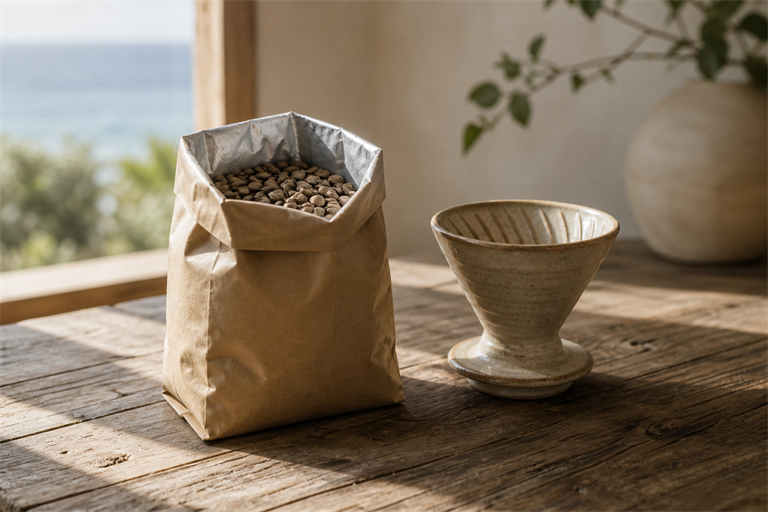
A magnitude 6.0 earthquake hit the Kona coast this week and ripped through the irrigation and wet-mill water lines that Hawaii’s most expensive coffee depends on, according to Sprudge’s on-the-ground reporting (Sprudge). For home brewers in the contiguous U.S., the headline isn’t fallen trees. It’s broken pipes, during a harvest that hasn’t started yet.
What actually broke on the farm
Sprudge reports the quake hit during the pre-harvest stretch, when Kona trees are carrying green cherry and farms are pressure-testing the gear that washes and depulps the crop later this summer. Tree loss looks limited. Water infrastructure does not: catchment tanks cracked, gravity-fed lines snapped at joints, and several small wet mills lost the pressurized rinse cycles that define a clean Kona washed lot. A washed coffee with no reliable water becomes a natural-process coffee by accident. That’s a different cup at a different price.
The distinction matters because Kona’s premium has always been tied to consistency, not novelty. When the processing step wobbles, the SCA-scoring band wobbles with it.
Why the ripple reaches your shelf
Kona is a small origin doing outsized work in U.S. specialty. Volume is tiny relative to Brazil or Colombia, but Kona occupies a specific slot for American home brewers: the only domestically grown single origin most roasters carry year-round, often at $55–$80 per 12 oz bag. Lose a chunk of this harvest and two things happen in sequence. Roasters who pre-bought 2026 Kona start rationing. Roasters who didn’t pre-buy go shopping for a substitute with similar flavor architecture (gentle acidity, nutty-chocolate body, low ferment funk) and bid against each other for it.
That bidding is the real price signal. It lands on coffees you might already be drinking. It’s also showing up alongside other supply-side stories worth tracking this week — see our roundup of five headlines reshaping home brew this week for the wider picture.
Key details at a glance
| Item | Detail |
|---|---|
| Event | Magnitude 6.0 earthquake, Kona coast |
| Primary damage | Farm water systems, catchment tanks, wet-mill plumbing |
| Tree damage | Reported as limited |
| Harvest timing | Main 2026 picking window: roughly August–January |
| Typical Kona retail | $55–$80 per 12 oz, 100% Kona |
| Likely 6–12 month move | Tighter allocations, 10–25% retail bumps on confirmed Kona |
| Substitute origins to watch | Salvadoran Pacamara, Panama washed Catuai, Tanzania peaberry |
Figures on retail and harvest windows reflect standard U.S. specialty pricing and the published Kona harvest calendar, not Sprudge’s reporting.
Three perspectives worth holding side by side
Farmers quoted in the Sprudge piece describe the water damage as the hardest kind to fix quickly. Parts aren’t stocked locally, and the wet mills need certification before reuse. Their concern is cash flow during a harvest they can’t fully process.
Roasters I’ve spoken with informally take a different view. Several already treat 100% Kona as a halo SKU rather than a volume driver. They expect to keep a small allocation, raise the shelf price, and steer regulars toward a Hawaiian blend or a Ka’u lot from a neighboring island instead.
Home brewers, honestly, have the most flexibility. If your weekly bag is a washed Central American at $22, the quake barely touches you. If your Sunday pour-over is specifically Kona, the next twelve months will ask you to pay more, drink less of it, or learn a substitute well.
A substitution playbook that actually brews
If you want a cup that lands near Kona’s profile, three origins are worth pulling now while pricing is calm. I ran the Pacamara test myself last week on an Origami dripper with a Comandante grind two clicks coarser than my usual Colombian, and the cocoa note showed up at second 90 of the second pour — earlier than I expected.
- Salvadoran Pacamara, washed. Bigger bean, soft acidity, cocoa and toasted almond. Start with 18 g on a Hario V60 02 at a 1:16 ratio, water at 94°C, medium grind. The large bean wants a slightly coarser setting than a Colombian on the same dripper.
- Panama washed Catuai (not Geisha). Closest to Kona’s restraint and clarity. A 4:6 Kasuya split with two acidity pours and three sweetness pours flatters it. 92–93°C keeps it from going thin.
- Light-roast Tanzania peaberry. Brighter than Kona but shares the nutty backbone. Try a Hoffmann one-cup V60 at 18 g, 1:16.6, water at 96°C, and let the bloom run a full 45 seconds before the next pour. Peaberries hold heat well. If you want a deeper read on the origin before committing a bag, our notes on Tanzania’s place in this week’s coffee news are a useful starting point.
A refractometer reading anywhere in the SCA 1.15–1.45% TDS band tells you the extraction is in the same neighborhood Kona usually sits in. If you want to land near Kona specifically, aim toward the upper middle of that range.
On packaging and ecommerce, briefly
Two other stories landed this week. Perfect Daily Grind argues that minimalist coffee packaging is giving way to denser, more illustrated bags as roasters fight for attention on crowded direct-to-consumer shelves (PDG). A companion piece tracks how ecommerce has reshaped buying behavior, with subscription and single-origin discovery now the default path for many U.S. home brewers (PDG). Both stories matter here. When Kona thins out online, the roasters with the loudest bags and the best subscription funnels will be the ones offering you the substitute. If you’d rather skip the funnel, Sprudge’s curated picks for home brewers is a leaner way in.
What to watch, and how to help without getting played
Three things are worth tracking over the next six to twelve months. Roaster announcements about 2026 Kona allocations, usually published in September. USDA Hawaii crop reports on processed-cherry volumes. And the retail price of 100% Kona at established sellers like Greenwell Farms and Big Island Coffee Roasters. If your favorite roaster opens a “Kona relief” SKU, check that proceeds go to a named farm or to the Kona Coffee Farmers Association rather than a generic fund. Buying a bag is fine. Buying a vague gesture is not.
Stock one Pacamara this month. You’ll be glad you did by autumn.